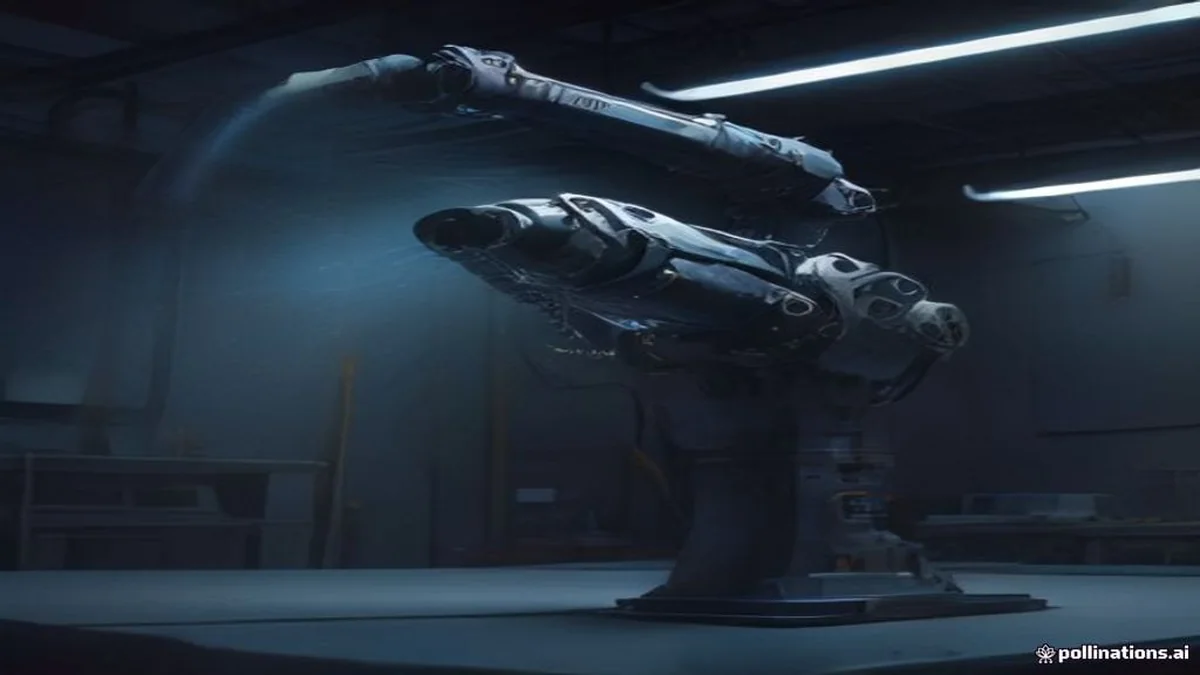
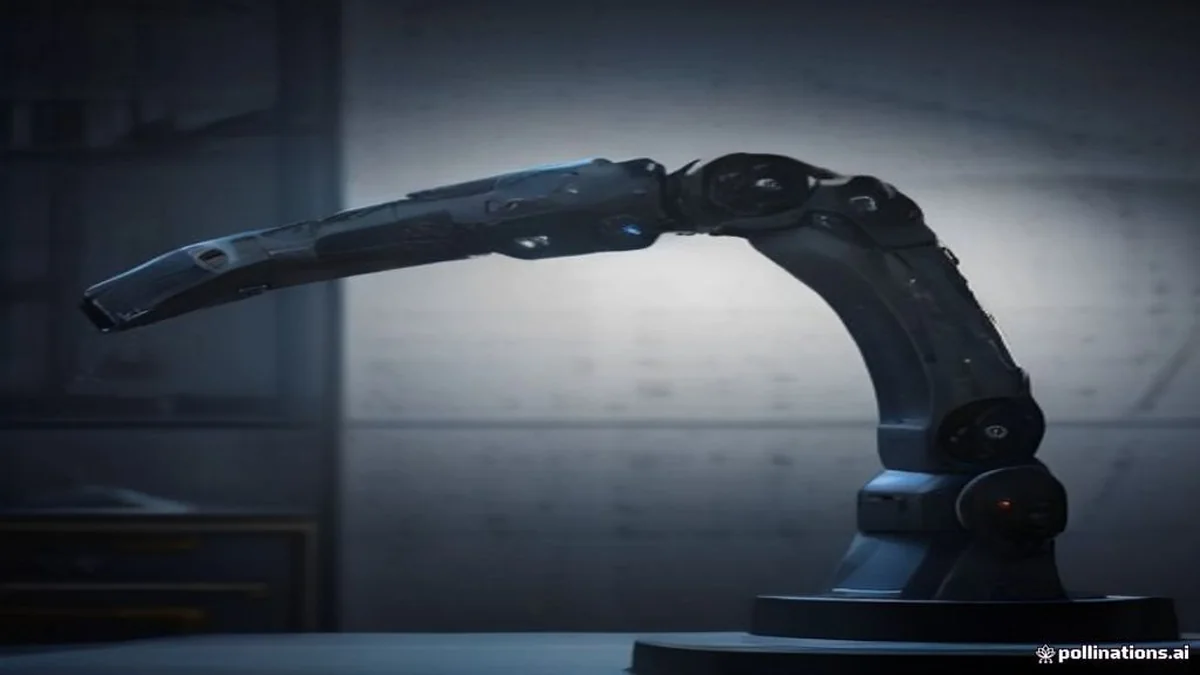
As the commercial imperative for Humanoid Robotics shifts from controlled academic environments to rigorous manufacturing floors, engineering teams are confronting the unforgiving realities of 24/7 continuous duty cycles. At RoboBusiness, executive leadership from AGIBOT detailed the exhaustive hardware hardening and software paradigms required to scale bipedal and wheeled humanoids into active production lines at facilities like Longcheer Technology. Transitioning from choreographed lab demonstrations to lights-out industrial operations demands unprecedented reliability in high-torque actuators, aggressive thermal dissipation strategies, and zero-loss Sim-to-Real neural policy execution.
High-Torque Brushless Motor Topography and Planetary Gearbox Tolerances
At the mechanical core of industrial bipedal mobility lies the thermal and structural limits of joint actuation. Traditional harmonic reducers and strain wave gears, while prized for zero-backlash operation, face severe degradation under continuous high-frequency impact loads common in automotive assembly tasks. AGIBOT's architectural roadmap emphasizes custom-engineered multi-stage planetary gearboxes coupled with high-pole-count brushless DC (BLDC) motors driven by specialized Field-Oriented Control (FOC) loops executing at frequencies exceeding 40 kHz. These drives must maintain strict positional repeatability under payload extremes while enduring millions of continuous cycles without micro-pitting on gear tooth flanks.
Furthermore, structural rigidity is balanced against inertial economy through the strategic deployment of carbon-composite skeletal frames and finite element analysis (FEA) optimized structural topology. Joint modules integrate absolute optical encoders and dual-axis torque sensors, feeding high-bandwidth telemetry back to decentralized microcontrollers. This localized closed-loop feedback prevents thermal runaway and dampens harmonic resonance before structural oscillations can destabilize the robot's zero-moment point (ZMP) and whole-body Physical AI control manifold.
- Actuator MTBF: Designed for >20,000 continuous operational hours prior to core maintenance overhaul.
- Continuous Payload Capacity: Up to 25 kg per arm with full dynamic compensation at maximum extension.
- Thermal Management: Active forced-air convection and liquid-cooled stator housings maintaining operating temperatures below 65°C under continuous 100% load.
- Sensor Bandwidth: Multi-camera RGB-D streams, solid-state LiDAR, and tactile array skins sampled at 500 Hz via deterministic TSN (Time-Sensitive Networking) Ethernet.
"Read it on AI Robot: The transition of humanoid robotics from academic testbeds to relentless 24/7 automotive floors requires a radical re-engineering of thermal management, planetary gear tolerances, and real-time inference latency."
Thermal Dissipation Dynamics Under Continuous Factory Duty Cycles
In structured laboratory benchmarks, humanoid robots typically execute episodic tasks interspersed with prolonged thermal cooling windows. Conversely, deploying robots into 24/7 automotive lines eliminates idle cooldown periods, exposing chronic flaws in thermal management. Without optimized passive and active cooling topologies, high-density actuators and onboard compute clusters—such as stacked NVIDIA Jetson Orin modules running Vision-Language-Action (VLA) models—suffer from thermal throttling, leading to packet drops, desynchronized kinematic trajectories, and catastrophic joint lockups.
AGIBOT's engineering approach implements decentralized thermal conduction pathways, channeling heat generated by copper stator windings directly through machined aluminum chassis members acting as heat sinks. Computational units are isolated within sealed, IP67-rated enclosures utilizing phase-change thermal interface materials and vapor chambers. This rigorous thermal engineering ensures that uninterrupted neural inference and motor commutation persist even in unconditioned, high-ambient-temperature industrial environments.
Real-Time Sim-to-Real Policy Execution via NVIDIA Isaac Sim and ROS 2
Bridging the reality gap between synthetic training environments and physical deployment floors remains the primary bottleneck for autonomous manipulation. AGIBOT leverages high-fidelity physics engines within NVIDIA Isaac Sim to conduct millions of hours of reinforcement learning and imitation learning runs. Policies are trained using randomized friction coefficients, actuator backlash profiles, and sensor noise models before compilation and deployment onto edge hardware via ROS 2 Humble.
During real-world execution at partner facilities like Longcheer Technology, these end-to-end neural policies process multi-modal sensor inputs—merging depth maps, force-torque feedback, and tactile array arrays—at deterministic rates below 20 milliseconds. By decoupling high-level semantic planning from low-level whole-body balance controllers, the robots can dynamically adapt to uncalibrated workpiece positioning, occlusions, and shifting payloads without triggering safety-stop interrupts, validating the commercial viability of general-purpose humanoids in complex manufacturing ecosystems.
🔗 Recommended Technical Resources & Deep Dive Links
- AGIBOT Official Technical Documentation ↗ — Official specifications, hardware whitepapers, and developer APIs for AGIBOT bipedal and wheeled robotic platforms.
- NVIDIA Isaac Sim Documentation ↗ — Comprehensive guide on physics-based simulation environments used for high-fidelity Sim-to-Real policy transfer.
- ROS 2 Humble Hawksbill Architecture ↗ — Standardized middleware documentation for real-time robotic distributed computing and low-latency sensor synchronization.