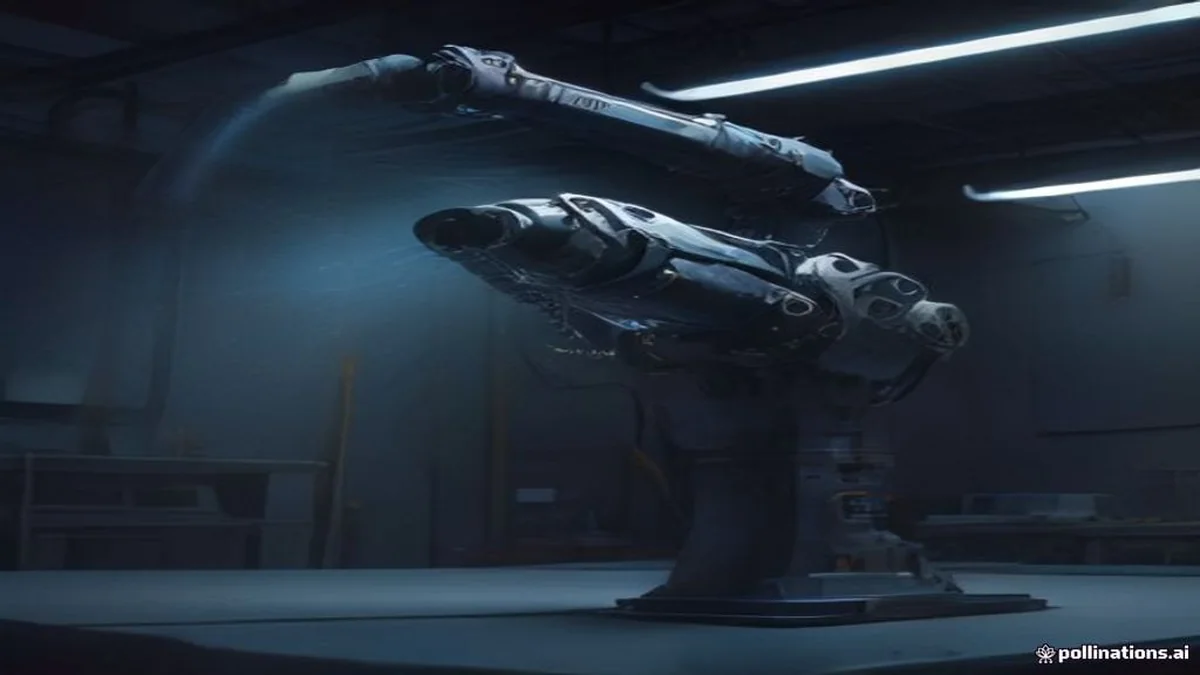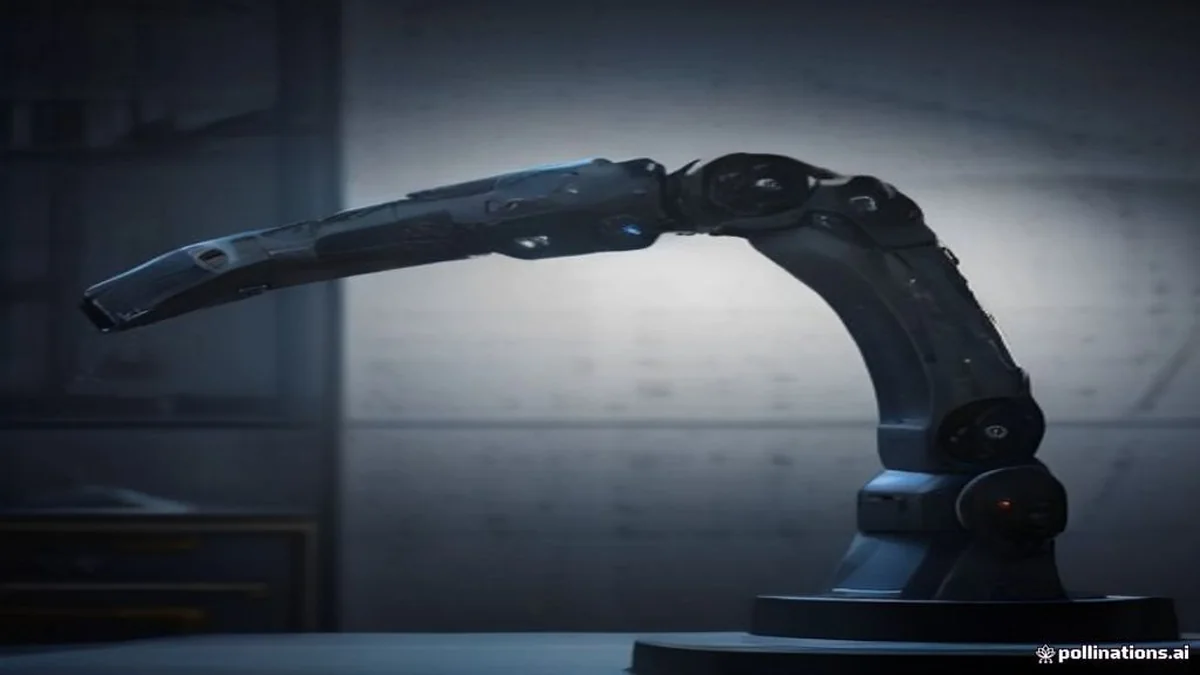
Modern high-throughput manufacturing environments face an unforgiving operational paradox: as production speeds scale to meet global demand, the margin for micro-defects contracts to near-zero tolerances. Traditional end-of-line statistical sampling is no longer economically viable or technically sufficient for complex assemblies. Instead, modern smart factories are deploying advanced industrial automation strategies that embed inline metrology, tactile arrays, and high-frequency sensor feedback directly into the kinetic loops of articulated robotic manipulators.
High-Frequency Sensor Integration and Sub-Millimeter Kinematic Feedback
Achieving zero-defect manufacturing requires moving beyond open-loop motion planning into deterministic closed-loop execution. Modern heavy-payload six-axis arms are increasingly outfitted with secondary optical encoders, wrist-mounted 3D laser line profilometers, and high-speed CMOS industrial cameras operating at frame rates exceeding 500 Hz. These peripheral sensors stream dense point-cloud data back to edge-compute units running optimized ROS 2 nodes, which dynamically compensate for thermal expansion, gear train backlash, and minor payload weight discrepancies in real time.
By coupling force-torque sensors at the end-effector with neural-network-driven surface inspection models, robotic systems can simultaneously perform complex assembly tasks—such as precision insertion or friction welding—while verifying dimensional integrity down to the micron. If an anomaly is detected in the spatial coordinates of a welded seam or bonded joint, the controller adjusts the robot's trajectory instantly, preventing defective parts from propagating downstream and drastically reducing costly scrap rates.
- Sensor Bandwidth: Inline 3D laser profilometry streaming point-clouds at 1 Gbps via GigE Vision interfaces.
- Control Latency: Deterministic motion updates executing within a 1-millisecond real-time Linux kernel loop (PREEMPT_RT).
- Positional Repeatability: Sub-0.02 mm kinematic accuracy maintained across continuous multi-shift production cycles.
- Edge Compute Hardware: Ruggedized industrial GPU modules running concurrent deep learning inference and trajectory optimization.
"Read it on AI Robot: The convergence of real-time metrology and compliant robotic actuation marks the definitive shift from reactive inspection to predictive defect elimination on the factory floor."
Dynamic Closed-Loop Quality Control and Adaptive Tooling Pathways
The integration of artificial intelligence into quality assurance infrastructure has shifted the paradigm from rigid threshold checking to context-aware adaptive manufacturing. Traditional machine vision systems relied on static brightness thresholds and geometric rule-checks that frequently triggered false positives when exposed to ambient lighting shifts or minor material finish variations. Today's systems leverage deep convolutional architectures and transformer-based vision backbones capable of isolating structural micro-fissures, porosity, and surface blemishes amidst complex industrial noise.
Furthermore, this sensory data informs adaptive tooling pathways. When an automated dispensing system or robotic riveting tool encounters varying material thickness or resistance, the integrated drive systems modulate torque output dynamically using Field-Oriented Control (FOC) algorithms executed on brushless DC motors. This ensures uniform clamping pressure and bead consistency regardless of micro-variations in raw component stock, embedding strict quality control directly into the physical actuation layer of the machine.
Unit Economics, Deployment Bottlenecks, and Scalability in Smart Plants
While the technical advantages of automated quality enhancement are undeniable, enterprise deployment requires careful navigation of integration bottlenecks. Retrofitting legacy factory floors with high-speed optical inspection suites and collaborative robotic cells demands rigorous calibration protocols, extensive validation pipelines, and secure edge-to-cloud data infrastructures. Plant engineers must balance capital expenditure (CapEx) against long-term operational expenditure (OpEx) savings derived from minimized downtime, reduced warranty claims, and eliminated manual sorting errors.
Ultimately, facilities that successfully navigate these integration hurdles establish a decisive competitive moat. By transforming every industrial robot into both an active assembler and an autonomous quality inspector, manufacturers unlock unprecedented operational visibility. As these systems mature, they serve as the foundational bedrock for fully autonomous, self-optimizing lights-out factories where quality is not merely verified after the fact, but mathematically guaranteed at every millisecond of the production lifecycle.
🔗 Recommended Technical Resources & Deep Dive Links
- ROS 2 Industrial Working Group ↗ — Open-source software framework empowering industrial automation, sensor integration, and real-time robotic control nodes.
- IEEE Robotics and Automation Society ↗ — Premier professional society advancing research and standardization in industrial robotics and automated manufacturing systems.
- NVIDIA Isaac Sim Documentation ↗ — Physically accurate simulation platform for testing robotic perception pipelines and closed-loop quality control algorithms.