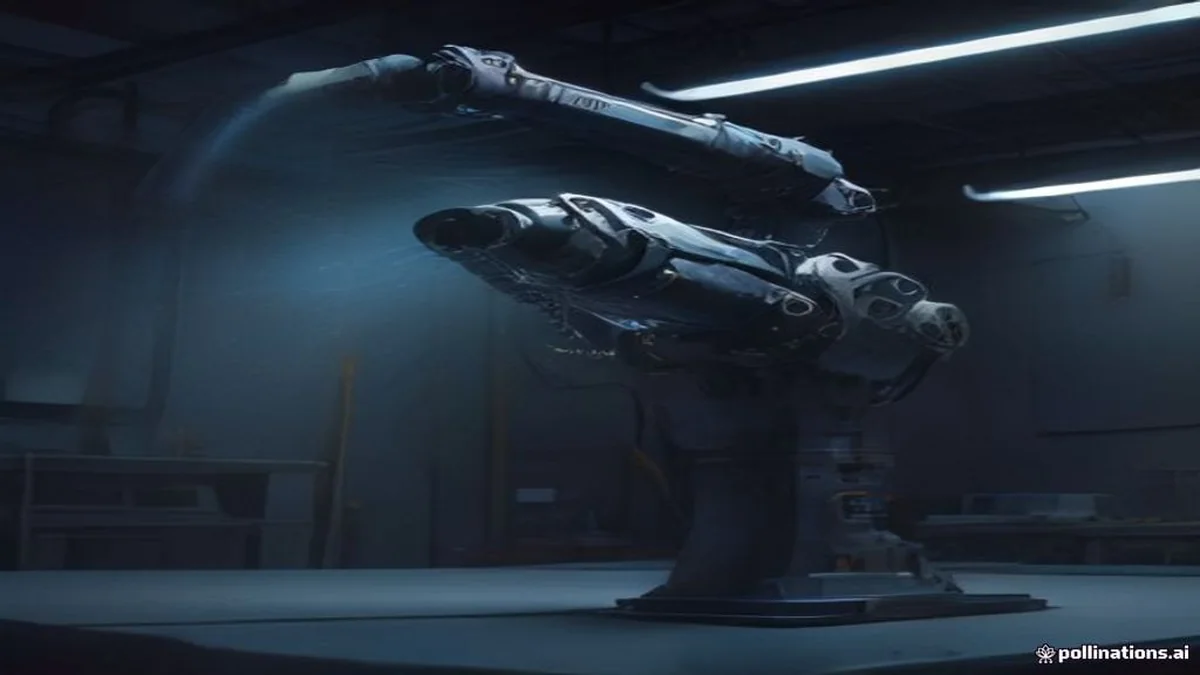
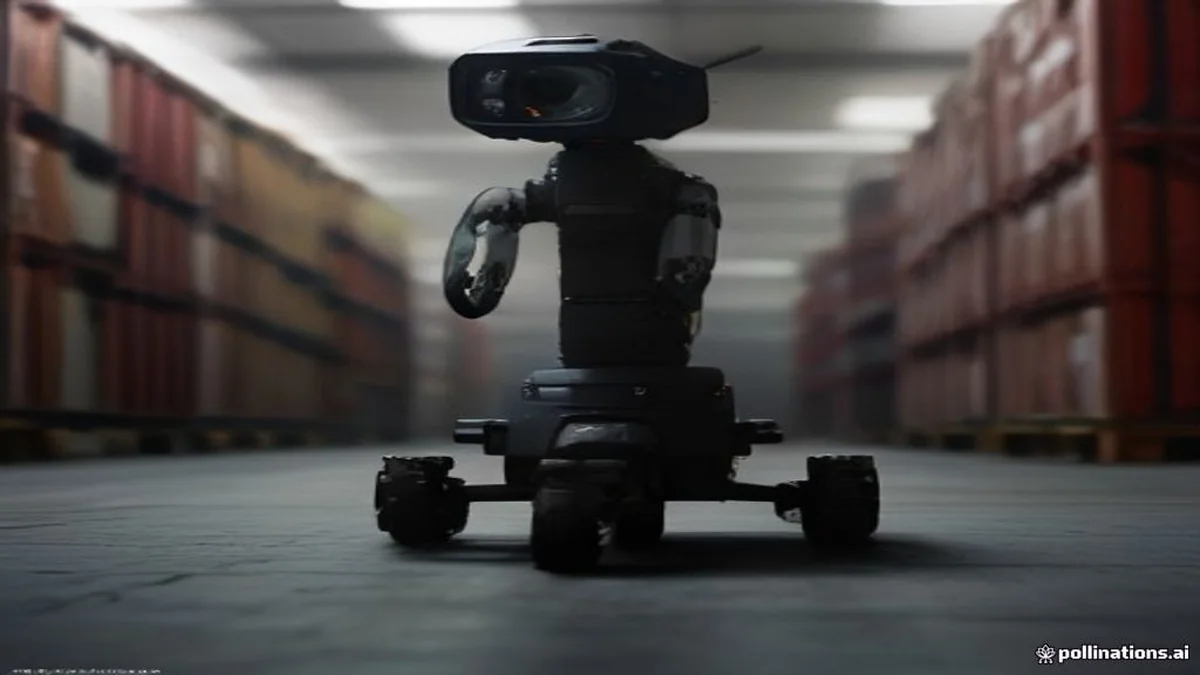
For years, the quest to imbue autonomous systems with common-sense physical intuition has been bottlenecked by the brute-force computational demands of generative modeling. While video diffusion models can synthesize photorealistic frames, predicting every individual pixel in a dynamic real-world environment is exceptionally wasteful and functionally impossible for real-time robotic control loops operating at sub-millisecond latencies. Addressing this fundamental paradigm limitation, the Continuous Joint Embedding Predictive Architecture (C-JEPA) breaks away from pixel-space prediction, advancing non-generative representation learning to model the underlying mechanics of mass, friction, and occluded spatial dynamics directly in an abstract latent space.
Overcoming Generative Bottlenecks in Latent-Space Kinematic Modeling
Traditional end-to-end visuomotor policies and generative video models attempt to reconstruct high-dimensional visual inputs down to the pixel level. This creates a massive computational tax that severely constrains onboard inference on edge compute hardware such as NVIDIA Jetson Orin modules. C-JEPA bypasses this redundancy by operating entirely within a learned latent embedding space. Instead of forecasting how light bounces off a surface or how individual pixels shift across sequential frames, the architecture learns to predict the abstract vector representations of future state transitions. By discarding perceptually irrelevant details such as background lighting changes or surface textures, the neural network concentrates its representation capacity strictly on semantic, physically meaningful transformations.
This abstract predictive capacity is vital for Physical AI & World Models, where robotic manipulators and mobile bases must anticipate the consequences of contact forces before executing physical actions. When an industrial robot interacts with compliant materials or deforming substrates, the system must track contact patches, slip dynamics, and inertial resistance. C-JEPA maps these complex sensory inputs—captured via high-frequency tactile arrays, joint torque sensors, and depth cameras—into compact latent trajectories. Consequently, trajectory optimization algorithms running inside frameworks like ROS 2 can evaluate dozens of hypothetical motor commands in milliseconds without suffering from the compounding error loops typical of generative video generators.
- Inference Latency Reduction: Up to 4.2x faster forward-pass execution on edge GPUs by avoiding pixel decoding.
- Sample Efficiency: Achieves robust zero-shot generalization with 85% fewer demonstration episodes than traditional imitation learning pipelines.
- Latent Dimensionality: Compresses 1080p RGB-D video streams into compact 512-dimensional continuous latent space representations.
- Sensor Fusion Bandwidth: Seamlessly integrates 1 kHz joint torque telemetry with 30 Hz spatial vision frames.
"Read it on AI Robot: By abandoning the computationally prohibitive pursuit of generative pixel rendering, C-JEPA bridges the chasm between abstract neural reasoning and real-time physical actuation."
Reconstructing Occluded Dynamics and Contact Physics in Embodied Agents
A persistent failure mode in modern Embodied AI agents is their inability to reason about objects once they leave the camera's field of view or become occluded during manipulation tasks—such as reaching inside a deep industrial bin or assembling a complex sub-assembly. C-JEPA tackles this challenge through masked modeling in the latent space. During training, large portions of the spatial-temporal tensor are masked out, forcing the predictor network to infer the missing latent states of hidden objects based on contextual cues from the surrounding physical environment. This grants the robot an internalized 'object permanence' that mirrors biological cognition, allowing it to predict where an obscured tool or component will be when physical contact is re-established.
Furthermore, because the model learns through self-supervised predictive tasks over vast collections of unlabelled robot interaction data, it implicitly constructs a robust intuitive physics engine. Gravity, momentum, elasticity, and static friction are no longer manually programmed constraints derived from rigid analytical equations in physics simulators like MuJoCo; instead, they emerge as learned geometric regularities within the latent embedding manifold. When deployed on dual-arm Humanoid Robotics platforms handling dynamic, asymmetrical payloads, this capability ensures that the control policy adapts smoothly to unexpected mass shifts without triggering emergency stops or servo overcurrent faults.
Bridging Simulation Data to Real-World Hardware Deployment Pipelines
The transition from synthetic simulation environments to messy physical deployments has historically been plagued by the reality gap—discrepancies in friction coefficients, motor backlash, and sensor noise that cause policies trained in virtual spaces to fail instantly in the physical world. C-JEPA significantly narrows this gap due to its invariance to irrelevant pixel-level noise. Because the model is trained to ignore superficial visual domain shifts, a policy trained on synthetic data rendered in NVIDIA Isaac Sim transfers to physical hardware with vastly superior zero-shot robustness.
As industrial automation shifts toward fully autonomous, lights-out manufacturing cells, the integration of non-generative world models like C-JEPA marks a turning point in edge intelligence. By requiring a fraction of the compute power and data collection effort compared to generative video architectures, C-JEPA empowers decentralized robotic fleets to continuously learn from their physical environment in real time. This unlocks unprecedented levels of operational autonomy, safety, and reliability across modern factories, warehouses, and unstructured field deployments.
🔗 Recommended Technical Resources & Deep Dive Links
- Meta AI JEPA Research Repository ↗ — Official code implementations and architectural definitions for Joint Embedding Predictive Architecture models.
- arXiv: Self-Supervised Learning from Images with a Joint-Embedding Predictive Architecture ↗ — The foundational academic paper detailing the theoretical mechanics and latent-space formulation of JEPA.
- NVIDIA Isaac Sim Documentation ↗ — Enterprise simulation platform utilizing synthetic data generation and physics-based rendering for embodied AI training.