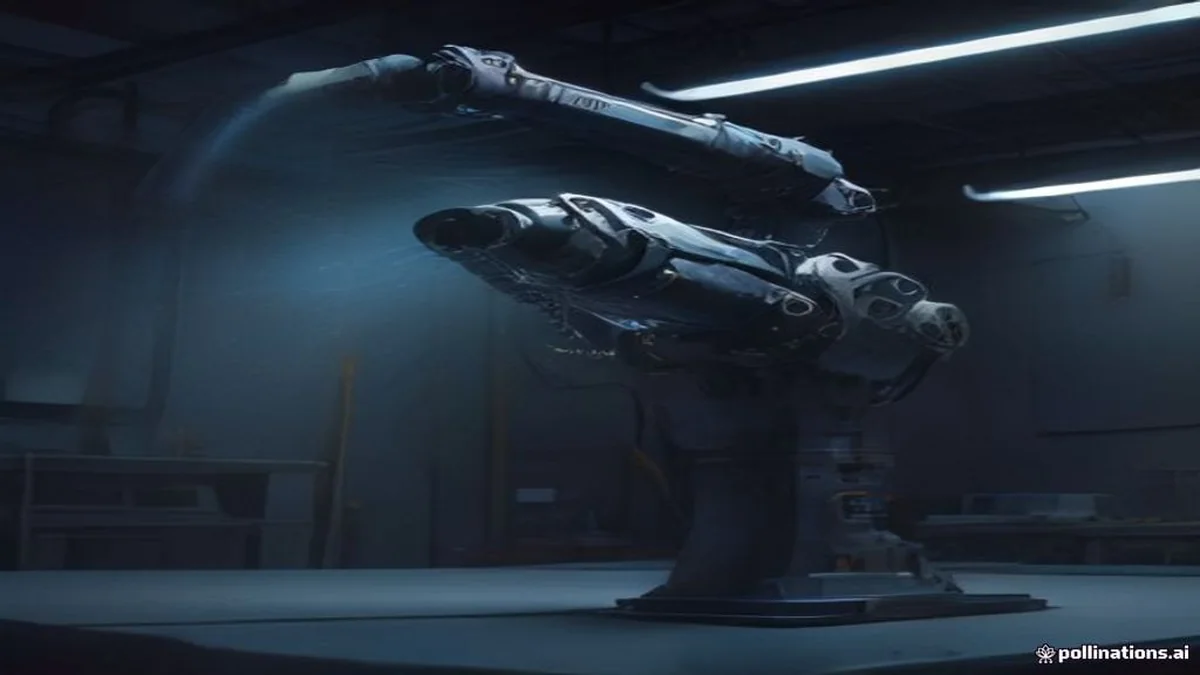
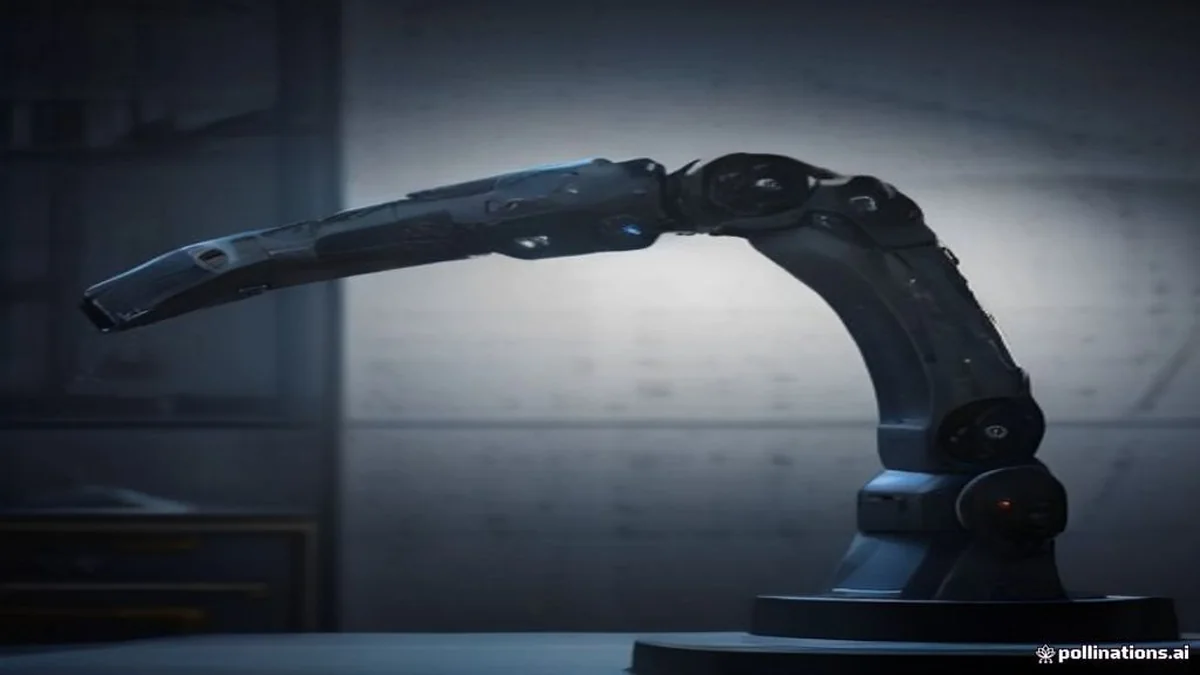
The rapid acceleration of nearshoring across Mexico’s principal manufacturing corridors—spanning Monterrey, Saltillo, the Bajío region, and Ciudad Juárez—has ignited an unprecedented capital expenditure surge in industrial robotics, collaborative robots (cobots), and autonomous mobile robots (AMRs). Driven by strict USMCA regional value content mandates and the necessity to harden supply chains against trans-oceanic disruptions, domestic and multinational manufacturers are modernizing production lines. This hardware deployment wave demands a rigorous re-engineering of kinematics, real-time control loops, and sensor fusion architectures to sustain high-throughput industrial environments.
Kinematic Optimization and Force-Torque Feedback in Collaborative Cells
Integrating collaborative robotic arms into legacy manufacturing plants requires exceptional precision in closed-loop torque control and collision detection. Unlike traditional industrial manipulators sequestered behind safety cages, modern cobots deployed in Mexican automotive and electronics hubs rely on multi-axis capacitive and piezoelectric tactile arrays. These sensor matrices interface directly with Field-Oriented Control (FOC) algorithms running at frequencies exceeding 20 kHz, ensuring that any external contact translates into instantaneous motor braking within milliseconds. This mechanical compliance is critical for mixed-model assembly lines where humans and machines share tight workspaces.
Furthermore, structural optimization utilizing carbon-fiber-reinforced composites and hollow-wrist designs minimizes end-effector inertia while preserving payload capacities ranging from 5kg to 20kg. Motion planners leverage advanced trajectory generation frameworks—such as those integrated within the Robot Operating System 2 (ROS 2) ecosystem—to execute jerk-limited movements. By smoothing velocity profiles, these control architectures reduce mechanical wear on harmonic reducers and brushless DC (BLDC) motors, extending mean time between failures (MTBF) in harsh thermal and particulate environments.
- Control Loop Frequency: Real-time FOC torque loops operating at $ge 20 ext{ kHz}$ for sub-millisecond collision mitigation.
- Payload-to-Weight Ratio: High-density actuators yielding up to 20kg payload capacity with less than 35kg arm mass.
- Repeatability Benchmarks: ISO 9283 positional repeatability maintained within $pm 0.02 ext{ mm}$ under maximum thermal load.
- Safety Standards: Compliance with ISO/TS 15066 collaborative safety thresholds and power-limiting protocols.
"Read it on AI Robot: The convergence of USMCA regional value content rules and high-throughput industrial automation is transforming Mexican manufacturing corridors into testbeds for resilient physical AI deployment."
Autonomous Mobile Robot (AMR) Navigation and Fleet Orchestration
Beyond fixed-base manipulation, intralogistics across sprawling industrial parks in Northern Mexico are undergoing a radical shift toward autonomous mobile robots. Modern AMRs supplant rigid magnetic stripe or inductive wire-guided AGVs by utilizing dynamic 2D and 3D LiDAR sensors, depth cameras, and ultra-wideband (UWB) localization beacons. These sensor modalities stream millions of point clouds per second into on-board edge compute units, where simultaneous localization and mapping (SLAM) algorithms construct real-time semantic maps of chaotic factory floors.
Fleet orchestration layers utilize centralized task-allocation servers communicating via secure Wi-Fi 6 and private 5G networks to manage multi-robot coordination. When dynamic obstacles—such as forklift trucks, human operators, or spilled inventory—obstruct a primary route, the AMR onboard motion planner executes dynamic local path replanning within milliseconds. This decentralized-centralized hybrid architecture ensures collision-free deadlock resolution across fleets exceeding fifty heterogeneous robots operating simultaneously in shared shop-floor zones.
Workforce Upskilling and Academic-Industrial Partnerships
The transition toward highly automated shop floors has exposed a critical bottleneck: a severe shortage of certified robotic integrators, PLC programmers, and embodied AI maintenance technicians. To bridge this skills gap, leading Mexican academic institutions including Tecnológico de Monterrey and the National Polytechnic Institute (IPN) have established dedicated advanced automation training centers. These facilities feature hardware-in-the-loop (HIL) simulators and digital twin sandboxes powered by platforms like NVIDIA Isaac Sim.
By training engineering students and upskilling incumbent manufacturing workers on real-world industrial controllers, sensor calibration protocols, and edge AI deployment pipelines, these ecosystems ensure sustainable technological adoption. Engineers can now test complex grasping heuristics and perception models in physics-accurate simulation before deploying them onto physical production lines, minimizing costly factory downtime and accelerating the return on investment for industrial robotics deployments across the region.
🔗 Recommended Technical Resources & Deep Dive Links
- ROS 2 Official Documentation ↗ — Comprehensive architectural guide for the Robot Operating System 2 framework used in modern industrial automation.
- NVIDIA Isaac Sim Documentation ↗ — Reference documentation for physics-accurate simulation of robotic systems and synthetic data generation.
- IEEE Robotics and Automation Society ↗ — Leading global society advancing research and standardization in robotics and industrial automation.